Lindsay Campbell writes on the intersections of knitting and song in women’s wartime activism in World War I, an activity sitting at the crossroads of nineteenth century domesticity and twentieth century feminist activism.
Each semester, I spend one day discussing wartime music with college students in my survey of music history for non-majors. Before delving into wartime symphonies and chamber music, I play a World War I-era parlor song. The song usually gets a giggle or two from the students. Perhaps the giggle is a reaction to the lyrics; the overtly patriotic music strikes them as over the top. For some, it is probably a giggle of discomfort with the domestic femininity it espouses, at odds with our twenty-first-century ideas of gender. For many students, however, it is the subject matter that seems odd: knitting. The parlor song in question is “There’s a Girl Who Is Knitting for You” by Florence Mills Nixson, one of dozens of knitting songs written during the First World War. After the giggles subside, a student will usually ask, “What does knitting have to do with patriotism in World War I, and why did someone write a song about it?” These questions drew me to knitting songs in the first place. As a hobby knitter and sewist, I was intrigued by seeing my interests reflected in music. As a musicologist, I wondered what these songs could tell us about the war effort on the homefront and women’s work in particular. Using knitting songs as a telescope to the past, I found myself glimpsing a side of the war often overlooked in history books and media.
Let’s begin with the most obvious question: what does knitting have to do with patriotism? Just over a century ago, the United States entered WWI, joining a war the country had avoided for three years. As young men prepared to travel to the war front, the rest of the country was left looking for ways to “do their bit.”1
The American Red Cross quickly engaged volunteers throughout the country, and they released the following request: “One and a half million each of knitted wristlets, mufflers, sweaters, and pairs of socks.”2
These knitted goods were desperately needed by soldiers in the trenches, to keep them warm and dry. And so, for all of those “left behind,” the task at hand became clear: knit.3
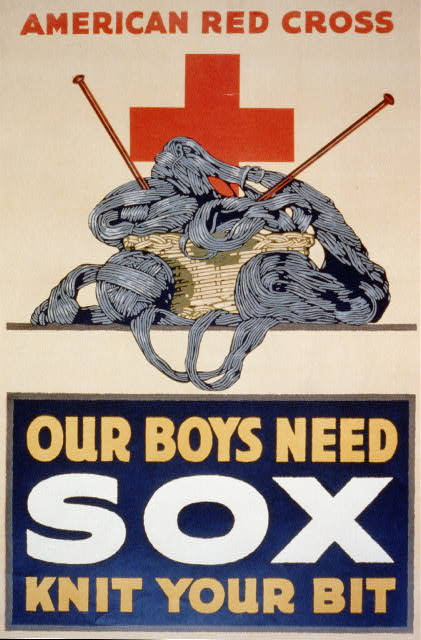
Figure 1. “Our Boys Need Sox, Knit Your Bit,” American National Red Cross Poster from 1918. Published by the American Lithographic Company, courtesy of the Library of Congress
Knit, they did. Knitting clubs formed at churches, women’s groups, and schools. Students, male and female, learned the craft. It permeated American consciousness; companies published knitting patterns specifically for wartime, and women’s organizations sold yarn in bulk to knitting groups. Historian Barbara Steinson writes, “Knitting...was a form of activity that enabled women of all ages and classes to participate in the war effort.”
4
Donations were taken for those who wanted to help but could not afford the price of yarn. All of these efforts combined to make knitting skyrocket in popularity: “it seemed that nothing could stop women’s knitting needles nor dampen the enthusiasm of the knitters.”
5
The knitting craze seeped into other aspects of American life, and music was no exception.
Unsurprisingly, patriotic songs also soared in popularity during the war years in the United States (1917–1918). Perhaps the most famous is “Over There” by George M. Cohan, but it was just one of hundreds of patriotic songs from this period.
6
Such songs participated in the already flourishing parlor song genre, a style of music intended for amateur performance in the home, associated with women.
7
In an age before recorded sound dominated musical life, the patriotic parlor song took hold and became, according to musicologist Christina Gier, “a significant mode of public discourse about the war.”
8
Community events associated with the war effort regularly featured such songs.
The knitting song formed at the convergence of these two fads. Career composers of many sorts capitalized upon the popularity of knitting. Anna Priscilla Risher’s 1917 song “Knitting (This War has Brought a Custom Back)” credits the war effort with reviving the craft among young knitters. Several Tin Pan Alley composers like Harry Von Tilzer and Billy Baskette published takes on the fad, including “And then She’d Knit, Knit, Knit” (1917) and “Each Stitch is a Thought of You, Dear” (1918). In 1915, a year after the British Empire entered the war, a similar trend took hold abroad. Irish composer Alicia Adélaïde Needham published a somber setting of Adrienne Cambry’s poem “Au soldat innconu” titled “Knitting War Song,” and in Canada, Muriel Bruce published a march-like song simply called “Knitting.” 9 Alongside these commercialized pieces, another stream of knitting songs spread across the United States, written by amateur musicians, often women, to perform at local events.
Starting in the summer of 1917, just after the Red Cross’s knitting request, American newspapers began to reference amateur knitting songs that were performed at community events for knitters and by knitters. Over the course of the next eighteen months the knitting song emerged from obscurity into prominence across the country in both print and practice. 10 This article traces knitting songs’ emergence and popularity in the United States through a folkloric approach to their history and transmission. Amateur knitting songs “materialize tradition,” hovering between material and verbal folklore, printed and performed music. 11 The songs examined here have been fixed in material form, allowing them to live on into the present as “intrusions from the past.” 12 Focusing specifically on knitting songs written by amateur composers, I treat these pieces as folk objects, “tangible evidence of the everyday past,” in order to illuminate the musical lives of ordinary American women during the Great War. 13 Taking inspiration from musicologist Candace Bailey’s work in microhistories of nineteenth-century American women’s lives, I use newspaper archives, sheet music, and public records to weave a narrative of wartime music making lead by women. 14 Despite gaps within individual microhistories, as a collective knitting songs reveal a wartime discourse written by women which centered and valued women’s labor. While these songs certainly highlight the importance of wartime knitting, they also emphasize the ways in which ordinary musicians harnessed song as a means of contributing to the war effort through charitable performance and fundraising. What follows is a story of the amateur knitting song, told through snapshots of the performers and songwriters who brought the tradition to life.
Florence Mills Nixson and the Nifty Nitters
In the early months of 1918, Florence Mills Nixson (1874–1960) composed a knitting song to the words of George Hopkins.
15
The song focused not on scenes from the battlefront, but rather a lovelorn girl “who is waiting and waiting and knitting for you.”
16
The song begins with a steady marching bassline, declaring that “Ev’ry girl, ev’ry where who is not over there” is “doing her bit, with the best of them.”
17
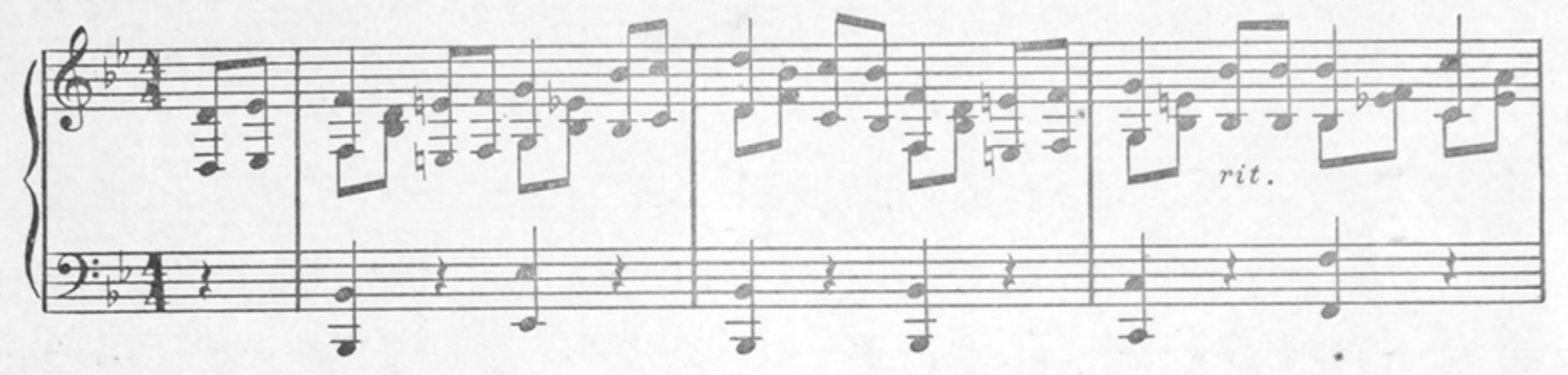
Figure 2. The piano introduction to Florence Mills Nixson’s “There’s a Girl Who is Knitting for You.”
Just like the protagonist of her song, Mills Nixson did her bit for the war effort. A resident of Pasadena and “well known in musical circles in California,” Mills Nixson dedicated her song to the Red Cross, promising that “every cent from its sale goes into the Red Cross coffers.” 18 In April of 1918, Mills Nixson printed her song with a local printer, Frank E. Garbutt, and the sheet music became part of the war effort. The Los Angeles Evening Express reported proceeds from the song’s sale at $999.10 for the Red Cross, following a two-week sale at the Morosco Theater in Los Angeles. 19 Performances of the piece spread through Southern California with each benefit performance selling copies of the song and donating the proceeds. 20 Mrs. W. E. Wiseman’s performance of the piece at an Elks Dance in Long Beach netted an additional $12.50 in sales. From its southern California origins, printed copies of Mills Nixson’s song travelled to other parts of the country, where its sale continued to support Red Cross activities.
Eight hundred miles away, a group of “Nifty Nitters,” a knitting club formed in the winter of 1917–1918 of “the most popular girls in El Paso[, Texas]” took up Mills Nixson’s knitting girl. 21 According to the El Paso Herald, the so-called Nifty Nitters put up a booth at the “Festival of the Allies” in October 1918. It oozed with patriotic knitting spirit, decorated as a drawing room with a piano, flags, knitting supplies, and copies of Mills Nixson’s song “hung side to side across the booth.” After the group of “wide-a-wake, patriotic girls in their immaculate Red Cross nurse’s uniforms” sang the “patriotic little song,” they sold sheet music alongside knitting bags. Apparently, the knitters sourced donated decorations to avoid spending any funds on “an elaborate float.” 22 The Herald draws attention to the group’s thriftiness, reflecting nationwide calls for self-rationing and sacrifice.
Using domestic feminine imagery, the Nifty Nitters aided the war effort while maintaining American gender ideals. The newspaper article highlights this: “a piano completed a really homey look,” recalling the era’s ties between pianos and femininity. 23 Just as in the lyrics of Mills Nixson’s song, the knitters are not described as women, but “girls,” even though many war knitters were adult women. In both the performance and composition, the designation “girls” implies youthfulness, not necessarily childhood. Indeed, two of the Nifty Nitters were married. 24 Mills Nixson’s girl is construed romantically, rather than childishly: “There’s a heart that is breaking in two, but I’ll knit it together when you, Come back to the girl, who is waiting and waiting and knitting for you.” 25 Knitting is thus both patriotic and romantic, a point neatly emphasized in the phrase “I’ll knit it together.” The through-composed form further highlights this duality: Mills Nixson abandons the introduction’s marching octaves in favor of a legato waltz figuration, the meter change coinciding with a lyrical shift from patriotic duty to romantic longing. While not all knitting songs imagine knitters as lovelorn, many constructed the knitter as a young woman, or girl, imbuing the discourse with a sense of intimacy. 26
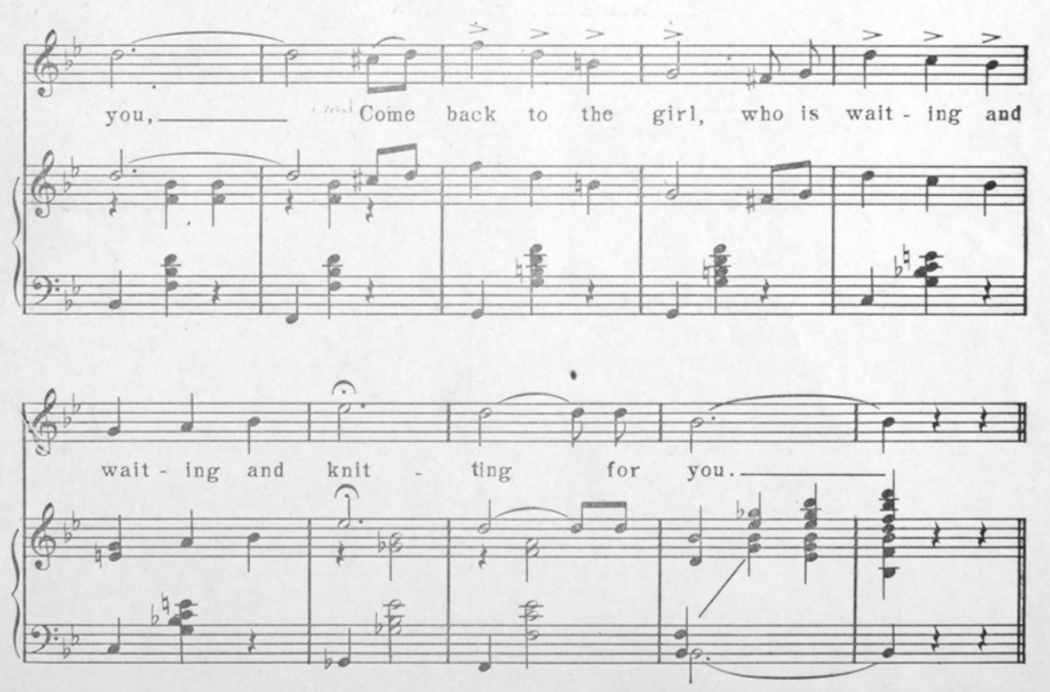
Figure 3. The concluding phrase of Mills Nixson’s “There’s a Girl Who is Knitting for You.”
By the end of 1918, Mills Nixson’s song had travelled through Red Cross networks from the west coast to the other side of the Mississippi River. Local chapters boasted that the piece was a “terrific hit” and had “a record of earning more than $3,000 for the Red Cross in six weeks.” 27
Floy McGlashan
Up in Kansas, Florence “Floy” McGlashan (1879–1969) wrote both music and lyrics for her knitting song.28 A native of Moran, McGlashan taught piano lessons and played with the local volunteer orchestra.29 As early as February 1918, McGlashan led Red Cross activities, taking on the role of “instructor of surgical dressing,” organizing classes, regular meetings, and volunteer opportunities.30 Alongside this work, McGlashan stitched together her song, aptly titled, “Knitting Song.” Much like Mills Nixson’s piece, the song opens with a fanfare gesture and marching tempo, encoding the song with patriotic flair. The opening line declares “we have joined the Red Cross Army.”31 She focuses her lyrics on the volunteer effort, only vaguely referencing the battlefront, singing “we are knitting, knitting, knitting all the day, For the soldier boys in France so far away.”32 Never quite defining the “we” of her song, McGlashan describes the knitters as “young and old alike.” While she specifically genders the soldiers as “boys,” the lyrics leave the knitters’ identities unnamed. This might allude to the men and boys who knitted, a point highlighted by Indiana composer Barclay Walker in his song, “The Boys Knit” (1918).33 McGlashan’s song has little of Mills Nixson’s romantic spirit, perhaps keeping such sentimentalism at bay in the line, “We have no time for sighing, If we keep our needles flying.”34 For McGlashan, productivity — not intimacy — is the goal. She indicates a rousing but steady tempo throughout the piece, furthering her utilitarian aims. The “needles keep time clicking” to the unchanging beat.35 Gier theorizes that “the physicality of the rhythm and musical gestures” in such wartime songs “produced feelings of soldiering.”36 In this way, McGlashan’s “Knitting Song” casts the volunteer knitter as a soldier both lyrically and musically, a sharp contrast to Mills Nixson’s “demure” girl with “downcast eyes.”37
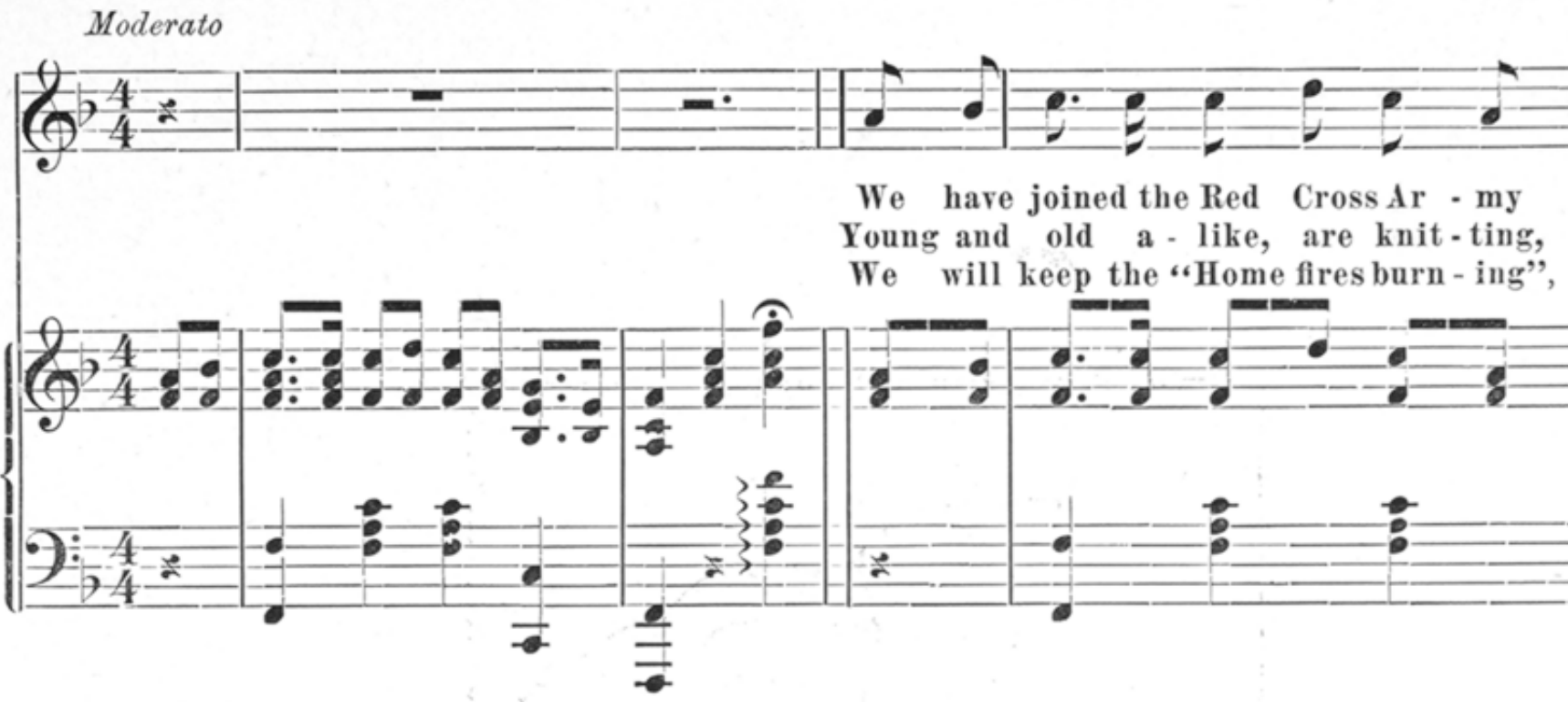
Figure 4. The opening marching fanfare to Floy McGlashan’s “Knitting Song,”
complete with militaristic dotted rhythms. Click here to listen to the song.
McGlashan’s song proved a hit in March 1918 when it premiered in Moran for a “packed house,” according to the local newspaper, earning “$65…a very material help to the local [Red Cross] chapter.”38 McGlashan, the local piano teacher, was likely at the keyboard. As the Moran Herald reported on March 29, 1918, the singer, Letia Smock, was joined on stage by a “number of little wee girls, young ladies, middle aged ladies, and elderly ladies.”39 This ensemble, who sang the choruses, were armed with their knitting needles, working hard at the task the song described. Knitting while singing was somewhat common in knitting song performances across the United States and abroad.40 In New Jersey, for example, “four beautiful young misses…demonstrated that they could knit and sing at the same time”41 and in Scranton, a group of Boy Scouts performed a knitting song, “singing the song and knitting.”42 Wellington Cross (1887–1975), a Canadian vaudeville singer, took to knitting regularly in performance. The Winnipeg Tribune declared Cross’s onstage knitting made the song “useful as well as ornamental,” resulting in six sweaters for the “boys ‘over there.’”43 The premiere of McGlashan’s knitting song, complete with onstage knitters, joined this trend.
McGlashan published her song, selling copies, and donating some of the profits to the Red Cross.44 Unlike Mills Nixson, McGlashan worked with a music publishing firm, A. W. Perry’s Sons in Missouri, receiving orders from “all parts of the United States.”45 The Moran Herald reported that sales exceeded McGlashan’s printing order of one-hundred copies, and a second order for an additional two-hundred copies had to be placed.46 How far the song traveled and where it was performed are unfortunately difficult questions to answer. McGlashan’s generic title of “Knitting Song” makes this particular piece difficult to track, as newspapers rarely list composers’ names when mentioning knitting songs.
Several parallels exist between McGlashan’s and Mills Nixson’s stories, which bring typical qualities of the knitting song fad to the forefront. Performances of both pieces emphasized the femininity of knitting. The Nifty Nitters, described as “girls” in the El Paso Herald, reflect Mills Nixson’s title “girl.” The premiere of McGlashan’s song placed fewer constraints on the age of participants, mirroring her lyrics. As leaders in their musical communities McGlashan and Mills Nixson had musical training and the means to publicize and print their work, enabling them to contribute donations of sheet music proceeds to the war effort.47 Through their songs, written and performed, McGlashan and Mills Nixson helped to construct the ideal knitting girl—hardworking, self-sacrificing, and, above all, dedicated to supporting the troops—in the public imaginary. Indeed, as wartime songs, both focus their lyrics on the working knitter rather than “over there,” assigning implicit value to women’s labor at home. Perhaps the most interesting parallel is that for both women, their knitting song was their sole publication. That neither was a career composer speaks to the grassroots nature of their knitting songs and the larger tradition thereof. Mills Nixson’s and McGlashan’s knitting songs and their subsequent performances are hardly unique. Instead, they act as an exemplar, offering us a glimpse into the larger culture of the knitting song.
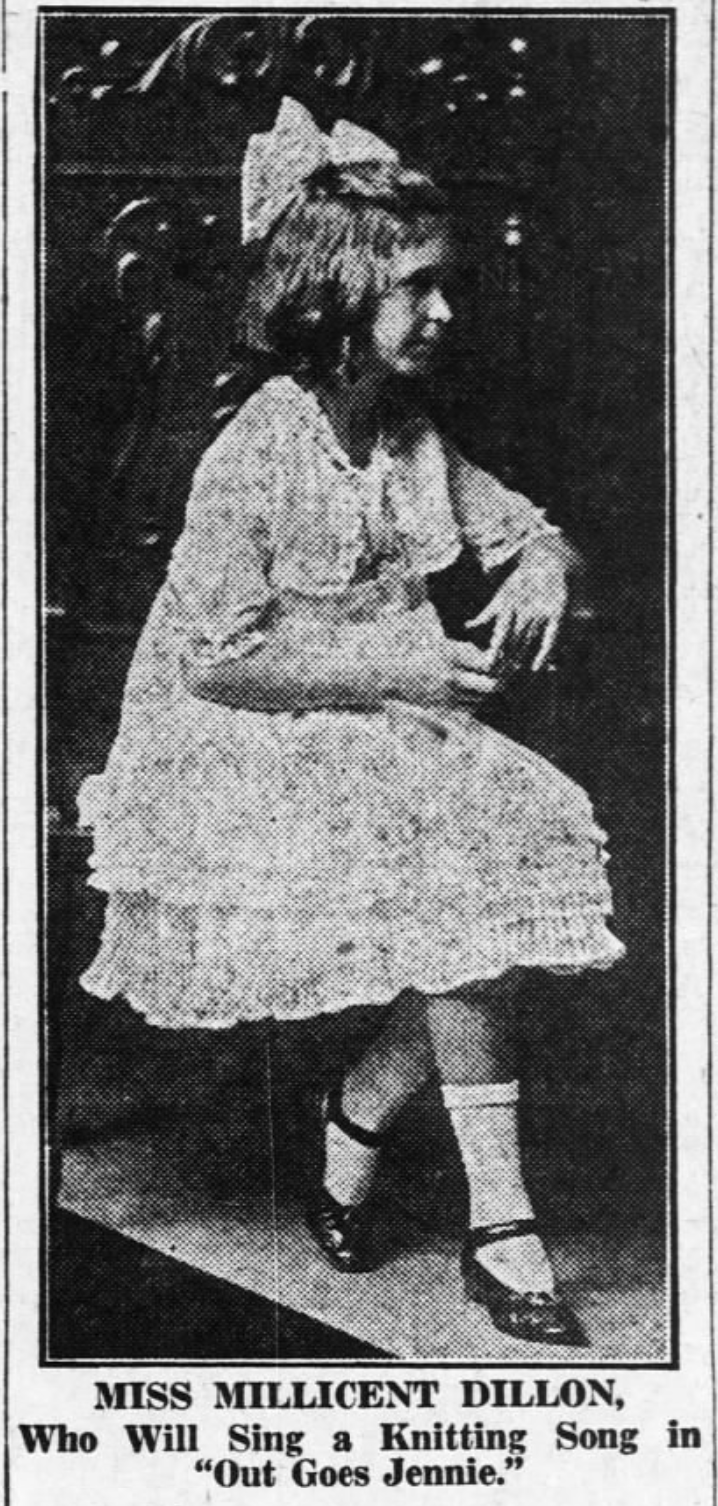
Figure 5. Millicent Dillon. March 22, 1918.
The Topeka Daily Capital.
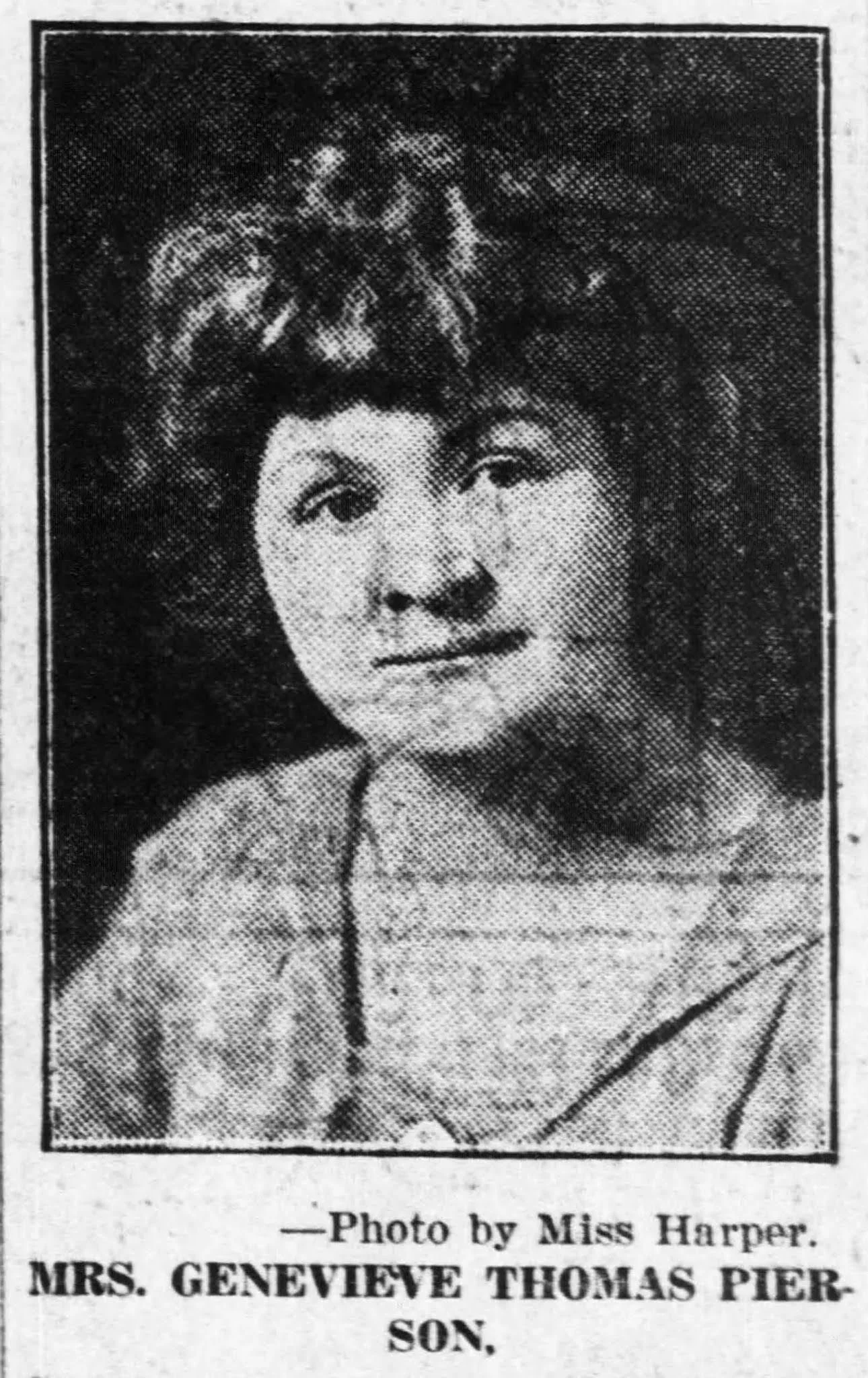
Figure 6. Genevieve Thomas Pierson.
January 19, 1919. The Topeka Daily Capital.
Lillian C. Small, in Oshkosh, Wisconsin, gives us a peek into the motivations for writing a knitting song. Small wrote her song in November of 1917, and, like those already mentioned, performed the song at a local charity event. At the event she recalled an afternoon of knitting wristlets with her two young daughters: “sitting in the sun on the porch as they rocked and knit, the younger girl started to sing a little melody to the words, ‘knitting, knitting’ and then kept it up for several minutes.”51 After mulling her daughter’s melody over for several hours, “the verses of the song had come to [Lillian Small] and had been put on paper.” According to Mrs. Small, the younger daughter played an active role in the song’s creation. The exchange of the melody between mother and daughter, prior to its written life, shows the fluid nature of these informal homegrown songs. Despite the newspaper’s declaration that the song “promises to become highly popular,” the Smalls never published their contribution.
These two familial stories highlight a specific variant of the knitting song, not the published and commercialized song, but the domestic knitting song developed within the home. Children across the country, like Millicent Dillon and Miss Small, engaged with knitting songs alongside their elders, adapting the trend to fit their needs. Eleven year old Helen Moore, of Shoreham, Vermont, performed a self-written knitting song at a fundraiser in the fall of 1917; the next year, local newspapers printed it.52 She reused an existing tune, “Darling Nellie Gray,” creating a contrafactum, a songwriting tactic that requires little musical training and is thus well-suited to young enthusiasts and those without musical training.53 A group of boys and girls in Minneapolis penned new text for “Over There.” Their version instructs, “Johnnie, get your yarn…Knitting has a charm.”54 Lyrics like Moore’s were shared widely in newspapers, as they required no musical notation to spread the song.
Moore’s text follows the same general themes as those discussed above: knitting as patriotic service, supporting the troops, and prioritizing voluntary rationing. Consistent with many other knitting songs, the lyrics set up a gender role binary in the first stanza, juxtaposing “our men are now in France” with “we, the women, now must help them.”55 The text goes on to focus on women’s duties in the war effort and also their contributions, of which knitting is the foremost. The chorus declares “We are knitting, knitting, knitting, Oh, we’re knitting all the day.” Moore concludes with the line “We must help and earn, and labor, if we wish to end this strife,” nodding towards societal shifts in the workforce during wartime.56 This contrast between the domestic imagery of the chorus and labor in Moore’s final line highlights the tensions inherent to women’s wartime contributions. Historian Katheryn Lawson makes a similar point about contrafacta written by Girl Scouts in the same period, which she argues “sought to legitimize women’s wartime labor and aspirations while reinforcing existing narratives of American assimilation.”57 Moore’s lyrics certainly reinforce conventional ideas of womanhood, not only by promoting knitting, but also by framing women as helpers who “stand behind” men. Yet, Moore also imbues her knitting women significant power to effect change: “we must work and save for them, ‘Tis the only way to end the struggle soon.”58 Within the context of the growing women’s suffrage movement in the United States, Moore’s lyrics strike a balance between traditional gender roles and emerging feminist identities.
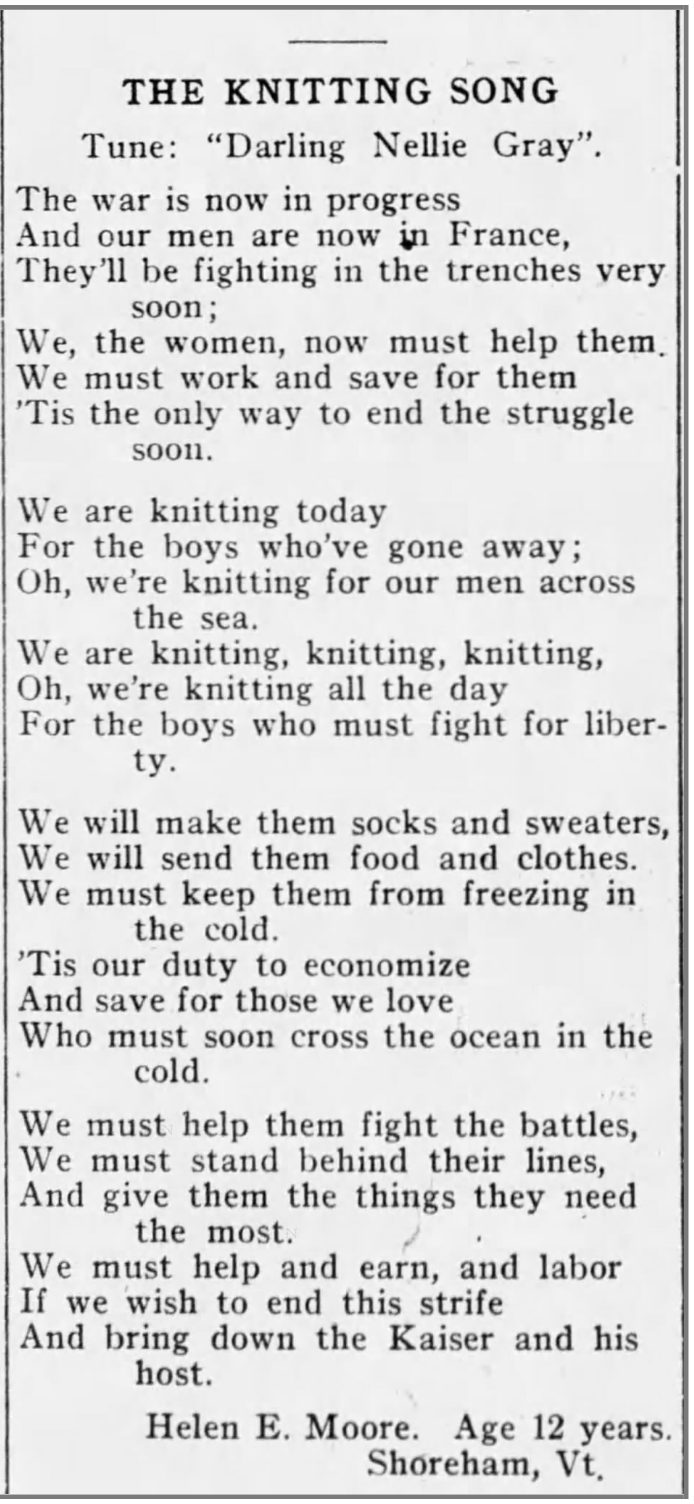
Figure 7. The text for Helen E. Moore’s “The Knitting Song.” Click here to listen to the song.
The Future Lives of the Knitting Song
Following the war’s conclusion in November 1918, knitting songs slowly disappeared from popular consciousness in the United States. Patriotic performances became sparser, and newly published knitting songs became a thing of the past. Preexisting songs fell out of fashion transforming into a relic of the war years. When a similar need for knitted goods arose during World War II, new knitting songs, fitted to the musical tastes of the day, emerged, and subsequently met the same fate as their predecessors.59 In the 21st century, knitting songs are rarely mentioned in musical circles, nor have they received much scholarly attention.60 Rather, the knitting song lives on in knitting groups. A website run by a knitter, and two albums of knitting songs (2012, 2014) recorded by another knitter, Melanie Gall, sparked my own interest in the topic.61 A New York City yarn store, Knitty City, hosted collegiate musicians for a recital of wartime knitting songs in 2023.62 These recent engagements with the knitting song repertoire, limited to songs with published sheet music, include McGlashan’s and Mills Nixson’s contributions alongside the Tin-Pan Alley songs mentioned at the start of this article. Unpublished songs, like Thomas Pierson’s and Small’s, remain hidden in the annals of history, yet it is these homegrown songs that reveal just how deeply the knitting song penetrated American life during the First World War.
Women across the United States were drawn to knitting songs, as a means of expression and volunteerism, at a time when American society was reforming itself in preparation for and reaction to the First World War. Within these songs, we see a microcosm of women’s identities in wartime, identities which strike a balance between nineteenth-century domesticity and twentieth-century feminism. While characters like the demure lovelorn sweetheart persisted, they did so alongside the proliferation of other identity formations like the soldiering knitter vital to the war effort. Knitting songs underscore the importance of women’s wartime activism —activism which was not only knitted, but also musical. In other words, knitting songs go beyond encouraging volunteer knitting; the songs themselves were products and means of activism, supporting war through fundraising and the construction of wartime identities. Despite lyrical images of girls “waiting and knitting,” the historical reality of knitting songs illuminates just the opposite: women of all ages, active in their communities, crafting, organizing, performing, fundraising, and laboring for the war effort.
Notes
1. Florence Mills Nixson, There’s a Girl Who Is Knitting for You, with George Hopkins (Frank E. Garbutt Co., n.d.), 2. ↩
2. Paula Becker, “Knitting for Victory -- World War I,” History Link, August 17, 2004, https://tinyurl.com/becker-knitting-for-victory. ↩
3. Mills Nixson, There’s a Girl Who Is Knitting for You, 2. ↩
4. Barbara J. Steinson, American Women’s Activism in World War I, 0 edition (Garland Publishing, 1981), 330. ↩
5. Steinson, American Women’s Activism in World War I, 331. ↩
6. For more on Cohan’s “Over there” and other popular songs, see John Druesedow, “Popular Songs of the Great War: Background and Audio Resources,” Notes 65, no. 2 (2008): 364–78. ↩
7. Susan Key, “Parlor Music,” in Grove Music Online (Oxford University Press, May 2016), https://tinyurl.com/parlor-music. ↩
8. Christina Gier, “Masculinity, War and Song in America 1917-1918,” in Popular Song in the First World War: An International Perspective, First issued in paperback, ed. John Mullen, Ashgate Popular and Folk Music Series (Routledge, Taylor & Francis Group, 2020), 121. ↩
9. Muriel E. Bruce and Baron Aliotti, Knitting (Chappell & Co., 1915); Alicia Adélaïde Needham and Adrienne Cambry, Soldier, Soldier, Dear Unknown: Knitting War Song, trans. G. Valentine Williams (Novello ; H.W. Gray Co., 1915).↩
10. Upwards of 30 knitting songs were copyrighted in 1918; this figure doesn’t include unpublished songs. Library of Congress. Copyright Office., Catalog of Copyright Entries, 1918 Music Last Half of 1918 New Series Vol 13 Part 2, with United States Copyright Office (U.S. Govt. Print. Off., 1918), http://archive.org/details/catalogofcopyrig132libr. ↩
11. Simon J. Bronner, “Folk Objects,” in Folk Groups And Folklore Genres: An Introduction (University Press of Colorado, 1986), 199, https://www.jstor.org/stable/j.ctt46nrb4. ↩
12. Bronner, “Folk Objects,” 199. ↩
13. Bronner, “Folk Objects,” 219. ↩
14. Candace Bailey, Unbinding Gentility: Women Making Music in the Nineteenth-Century South (University of Illinois Press, 2021), https://muse.jhu.edu/pub/34/monograph/book/83122. ↩
15. Following her death of her first husband, E. J. Nixson, in 1918, Mills Nixson remarried Jesse F. Waterman in 1926 and took the name Florence Mills Waterman. Nixson, Florence M. California Department of Public Health, California, County Birth, Marriage, and Death Records, 1830-1980, September 14, 1926. Courtesy of www.vitalsearch-worldwide.com, Ancestry.com. “Mrs. F. M. Waterman,” Obituary Notices, Progress-Bulletin (Pomona, CA), December 21, 1960, Newspapers.com. “Reno Man Dies in Pasadena,” The Sacramento Bee (Sacramento, CA), October 15, 1918, Newspapers.com. Department of Public Health↩
16. Mills Nixson, There’s a Girl Who Is Knitting for You, 5.↩
17. Mills Nixson, There’s a Girl Who Is Knitting for You, 2.↩
18. The Sacramento Bee, “Reno Man Dies in Pasadena”; “Red Cross Activities,” Venice Evening Vanguard (Venice, CA), May 10, 1918, Newspapers.com.↩
19. $999.10 in 1918 had the buying power of over $20,000 in 2026. “Red Cross,” Los Angeles Evening Express (Los Angeles, CA), May 9, 1918, Newspapers.com. ↩
20. “Elks Dance Is a Benefit for Uncle Sam,” The Long Beach Press (Long Beach, CA), May 18, 1918, Newspapers.com; “Benefit Performances,” Santa Ana Daily Register (Santa Ana, CA), May 16, 1918, Newspapers.com; Venice Evening Vanguard, “Red Cross Activities.” ↩
21. The author of this newspaper article mistakenly attributes the song to George Hopkins, the lyricist. “Nifty Nitters Have Fine Booth and Nice Float Without Spending Money,” El Paso Herald (El Paso, TX), October 3, 1918, Newspapers.com. “Miss Helen Stratton, Popular Society Girl, Daught of Mr. and Mrs. C. E. Stratton, Weds Lieut. J. A. Klein Jr., of the 34th Infantry,” El Paso Times (El Paso, TX), June 8, 1918, Newspapers.com. ↩
22. The article goes on to boast that the girls had raised enough money to “adopt a French war orphan.” El Paso Herald, “Nifty Nitters Have Fine Booth and Nice Float Without Spending Money.” ↩
23. Ruth A. Solie, “‘Girling’ at the Parlor Piano,” in Music in Other Words, 1st ed., Victorian Conversations (University of California Press, 2004), https://www.jstor.org/stable/10.1525/j.ctt1pp6qz.6. ↩
24. The Herald identifies the knitters as Mrs. John Alexander Klein, jr. (Helen Stratton, 21), Mrs. Jesse Beeson Hunt (Katherine Pfaff, 18), Miss Elizabeth Stevens, Miss Alice Myles, Miss Sarah Bridgers, Miss Valerie Lorig, and Miss Agnes Stewart. Both Stratton and Hunt married army men in June of 1918. El Paso Herald, “Nifty Nitters Have Fine Booth and Nice Float Without Spending Money,” 8. ↩
25. Mills Nixson, There’s a Girl Who Is Knitting for You, 5. ↩
26. Amy Wells identifies the role of “sweetheart” as a “certain duty for American women in World War I.” Amy Wells, “From Tulips and Curls to Donuts and Jazz: The Representation of Women in American Popular and Soldier Songs during the First World War,” in Popular Song in the First World War: An International Perspective, First issued in paperback, ed. John Mullen, Ashgate Popular and Folk Music Series (Routledge, Taylor & Francis Group, 2020), 137. For another example of textiles imbued with intimacy and emotional meaning see Sasha Handley, “Objects, Emotions and an Early Modern Bed-Sheet,” History Workshop Journal 85 (April 2018): 169–94, https://doi.org/10.1093/hwj/dbx050. ↩
27. “Champaign County Red Cross News: Latest Song Now on Sale By County Head Quarters,” The Champaign Daily Gazette (Champaign, IL), September 28, 1918, Newspapers.com. ↩
28. “Miss Floy McGlashan,” Deaths and Funerals, The Iola Register (Iola, KS), July 30, 1969, Newspapers.com. ↩
29. McGlashan, Floy, Department of Commerce and Labor - Bureau of the Census, 1910 United States Federal Census (Marmaton, Allen, Kansas), 1910, Accessed via Ancestry.com. “History City of Moran, Kansas,” City of Moran, Moran, KS, accessed February 12, 2026, http://www.morancity.org/history.html. ↩
30. “Red Cross Ladies at Work,” The Moran Herald (Moran, KS), February 8, 1918, Newspapers.com. ↩
31. Floy McGlashan, Knitting Song (A. W. Perry’s Sons, 1918), 2. ↩
32. McGlashan, Knitting Song, 3. ↩
33. Barclay Walker, The Boys Knit, with Lydia Rinehart (Lydia Rinehart, 1918), 3; Becker, “Knitting for Victory -- World War I.” ↩
34. McGlashan, Knitting Song, 2. ↩
35. McGlashan, Knitting Song, 3.↩
36. Gier, “Masculinity, War and Song in America 1917-1918,” 123. ↩
37. Mills Nixson, There’s a Girl Who Is Knitting for You, 3. ↩
38. $65 in 1918 has the buying power of more than a $1000 in 2026 when adjusted for inflation. “$65 More to Red Cross: Knitting Song Made Popular Hit at Mary Pickford Moule Play,” The Moran Herald (Moran, KS), March 29, 1918, Newspapers.com. ↩
39. The Moran Herald, “$65 More to Red Cross: Knitting Song Made Popular Hit at Mary Pickford Moule Play.” ↩
40. In a sampling of 33 knitting song performances country-wide, ten feature either the performers or audience knitting. ↩
41. “Chattle Glee and Mandolin Clubs Get Rousing Reception at School; Program One of the Best on Record,” Long Branch Daily Record (Long Branch, NJ), May 4, 1918, Newspapers.com.↩
42. “Original Entertainment by the Boy Scouts,” The Scranton Republican (Scranton, PA), January 16, 1918, Newspapers.com. ↩
43. “Vaudeville Gossip,” The Winnipeg Evening Tribune (Winnipeg, Canada), May 11, 1918, Newspapers.com. ↩
44. McGlashan’s song sold for 25 cents a copy (the equivalent of just over $5 in 2026). For every hundred copies sold (sales of $25), the Moran Herald reports McGlashan would donate $10. The newspaper mentions the high cost of printing and publication, a possible justification for the $15 discrepancy. “Knitting Song Here: First Edition of One Hundred Copies All Sold in Advance,” The Moran Herald (Moran, KS), April 19, 1918, Newspapers.com. ↩
45. The Moran Herald, “Knitting Song Here: First Edition of One Hundred Copies All Sold in Advance.”↩
46. The Moran Herald, “Knitting Song Here: First Edition of One Hundred Copies All Sold in Advance.”↩
47. While McGlashan and Mills Nixson have not previously received scholarly attention, that both women are repeatedly mentioned in their local newspapers for their musical contributions attests to their roles as musical leaders. The City of Moran website lists McGlashan’s musical service, alongside her father’s, in a narrative of Moran’s early history. City Moran, “History City of Moran, Kansas.” ↩
48. “‘Out Goes Jennie,’ Presented by Woman’s Club,” The Topeka Daily Capital (Topeka, KS), April 5, 1918, 6, Newspapers.com. ↩
49.“Little Miss Dillon, in ‘Out Goes Jennie,’” The Topeka Daily Capital (Topeka, KS), March 22, 1918, 6, Newspapers.com.
↩
50. Pierson does not appear in Christopher Reynold’s database of published songs by women in the United States and other English speaking countries. Christopher Reynolds, “Documenting the Zenith of Women Song Composers: A Database of Songs Published in the United States and the British Commonwealth, ca. 1890–1930,” Notes 69, no. 4 (2013): 671–87, https://doi.org/10.1353/not.2013.0059. ↩
51. “Writes Knitting Song; Sings It: Sister of Mayor Cox Tells of Composition,” Middletown Times-Press (Middletown, NY), November 28, 1917, 3, Newspapers.com.
↩
52. “Parcel Post Sale,” Middlebury Record (Vergennes, VT), September 27, 1917, 5; “The Knitting Song,” The Middlebury Register (Middlebury, VT), March 22, 1918, 4, Newspapers.com.↩
53. For these same reasons, contrafacta had long been employed as a protest tool by labor organizers. Katheryn Lawson documents the popularity of patriotic contrafacta amongst children during World War I in her article on Girl Scout Contrafacta. Katheryn Lawson, “Girl Scout Contrafacta and Symbolic Soldiering in the Great War,” American Music 35, no. 3 (2017): 375, https://doi.org/10.5406/americanmusic.35.3.0375. “Pupils to Knit to the Tune of ‘Over There,’” Pierre Weekly Press (Pierre, SD), March 1, 1918, 1, Newspapers.com, https://newscomwc.newspapers.com/image/614906293/.↩
54. Pierre Weekly Press, “Pupils to Knit to the Tune of ‘Over There,’” 1.↩
55. The Middlebury Register, “The Knitting Song,” 4.↩
56. The Middlebury Register, “The Knitting Song,” 4. ↩
57. Lawson, “Girl Scout Contrafacta and Symbolic Soldiering in the Great War,” 376.↩
58. The Middlebury Register, “The Knitting Song.”↩
59. Donna Ferguson, “Knit for Victory: The Lost Songs That Gave Women a Role on the Home Front,” Society, The Observer, March 20, 2022, https://tinyurl.com/knit-for-victory.↩
60. While there is a wealth of musicological literature on the music of World War One, to the best of my knowledge, there is no musicological scholarship which focuses on knitting songs.↩
61. Karen C. K. Ballard, “WWI Knitting and Sewing Songs,” Threadwinder, 2012, https://tinyurl.com/threadwinder-knitting-songs. ↩
62. Sing a Song and Knit, with Lili Tobias, Knitty City, 2023, 3:16, https://tinyurl.com/sing-a-song-and-knit. ↩
Bibliography
Bailey, Candace. Unbinding Gentility: Women Making Music in the Nineteenth-Century South. University of Illinois Press, 2021. https://muse.jhu.edu/pub/34/monograph/book/83122.
Ballard, Karen C. K. “WWI Knitting and Sewing Songs.” Threadwinder, 2012. https://tinyurl.com/threadwinder-knitting-songs.
Becker, Paula. “Knitting for Victory -- World War I.” History Link, August 17, 2004. https://tinyurl.com/becker-knitting-for-victory.
Bronner, Simon J. “Folk Objects.” In Folk Groups And Folklore Genres: An Introduction. University Press of Colorado, 1986. https://www.jstor.org/stable/j.ctt46nrb4.
Bruce, Muriel E., and Baron Aliotti. Knitting. Chappell & Co., 1915.
City of Moran. “History City of Moran, Kansas.” Moran, KS. Accessed February 12, 2026. http://www.morancity.org/history.html.
Druesedow, John. “Popular Songs of the Great War: Background and Audio Resources.” Notes 65, no. 2 (2008): 364–78.
El Paso Herald (El Paso, TX). “Nifty Nitters Have Fine Booth and Nice Float Without Spending Money.” October 3, 1918. Newspapers.com.
El Paso Times (El Paso, TX). “Miss Helen Stratton, Popular Society Girl, Daught of Mr. and Mrs. C. E. Stratton, Weds Lieut. J. A. Klein Jr., of the 34th Infantry.” June 8, 1918. Newspapers.com.
Ferguson, Donna. “Knit for Victory: The Lost Songs That Gave Women a Role on the Home Front.” Society. The Observer, March 20, 2022. https://tinyurl.com/knit-for-victory.
Gier, Christina. “Masculinity, War and Song in America 1917-1918.” In Popular Song in the First World War: An International Perspective, First issued in paperback, edited by John Mullen. Ashgate Popular and Folk Music Series. Routledge, Taylor & Francis Group, 2020.
Handley, Sasha. “Objects, Emotions and an Early Modern Bed-Sheet.” History Workshop Journal 85 (April 2018): 169–94. https://doi.org/10.1093/hwj/dbx050.
Key, Susan. “Parlor Music.” In Grove Music Online. Oxford University Press, May 2016. https://tinyurl.com/parlor-music.
Lawson, Katheryn. “Girl Scout Contrafacta and Symbolic Soldiering in the Great War.” American Music 35, no. 3 (2017): 375–411. https://doi.org/10.5406/americanmusic.35.3.0375.
Library of Congress. Copyright Office. Catalog of Copyright Entries, 1918 Music Last Half of 1918 New Series Vol 13 Part 2. With United States Copyright Office. U.S. Govt. Print. Off., 1918. http://archive.org/details/catalogofcopyrig132libr.
Long Branch Daily Record (Long Branch, NJ). “Chattle Glee and Mandolin Clubs Get Rousing Reception at School; Program One of the Best on Record.” May 4, 1918. Newspapers.com.
Los Angeles Evening Express (Los Angeles, CA). “Red Cross.” May 9, 1918. Newspapers.com.
McGlashan, Floy. Knitting Song. A. W. Perry’s Sons, 1918.
Middlebury Record (Vergennes, VT). “Parcel Post Sale.” September 27, 1917.
Middletown Times-Press (Middletown, NY). “Writes Knitting Song; Sings It: Sister of Mayor Cox Tells of Composition.” November 28, 1917. Newspapers.com.
Mills Nixson, Florence. There’s a Girl Who Is Knitting for You. With George Hopkins. Frank E. Garbutt Co., n.d.
Needham, Alicia Adélaïde, and Adrienne Cambry. Soldier, Soldier, Dear Unknown: Knitting War Song. Translated by G. Valentine Williams. Novello ; H.W. Gray Co., 1915.
Pierre Weekly Press (Pierre, SD). “Pupils to Knit to the Tune of ‘Over There.’” March 1, 1918. Newspapers.com. https://newscomwc.newspapers.com/image/614906293/.
Progress-Bulletin (Pomona, CA). “Mrs. F. M. Waterman.” Obituary Notices. December 21, 1960. Newspapers.com.
Reynolds, Christopher. “Documenting the Zenith of Women Song Composers: A Database of Songs Published in the United States and the British Commonwealth, ca. 1890–1930.” Notes 69, no. 4 (2013): 671–87. https://doi.org/10.1353/not.2013.0059.
Santa Ana Daily Register (Santa Ana, CA). “Benefit Performances.” May 16, 1918. Newspapers.com.
Sing a Song and Knit. With Lili Tobias. Knitty City, 2023. 3:16. https://tinyurl.com/sing-a-song-and-knit.
Solie, Ruth A. “‘Girling’ at the Parlor Piano.” In Music in Other Words, 1st ed. Victorian Conversations. University of California Press, 2004. https://www.jstor.org/stable/10.1525/j.ctt1pp6qz.6.
Steinson, Barbara J. American Women’s Activism in World War I. 0 edition. Garland Publishing, 1981.
The Champaign Daily Gazette (Champaign, IL). “Champaign County Red Cross News: Latest Song Now on Sale By County Head Quarters.” September 28, 1918. Newspapers.com.
The Iola Register (Iola, KS). “Miss Floy McGlashan.” Deaths and Funerals. July 30, 1969. Newspapers.com.
The Long Beach Press (Long Beach, CA). “Elks Dance Is a Benefit for Uncle Sam.” May 18, 1918. Newspapers.com.
The Middlebury Register (Middlebury, VT). “The Knitting Song.” March 22, 1918. Newspapers.com.
The Moran Herald (Moran, KS). “$65 More to Red Cross: Knitting Song Made Popular Hit at Mary Pickford Moule Play.” March 29, 1918. Newspapers.com.
The Moran Herald (Moran, KS). “Knitting Song Here: First Edition of One Hundred Copies All Sold in Advance.” April 19, 1918. Newspapers.com.
The Moran Herald (Moran, KS). “Red Cross Ladies at Work.” February 8, 1918. Newspapers.com.
The Sacramento Bee (Sacramento, CA). “Reno Man Dies in Pasadena.” October 15, 1918. Newspapers.com.
The Scranton Republican (Scranton, PA). “Original Entertainment by the Boy Scouts.” January 16, 1918. Newspapers.com.
The Topeka Daily Capital (Topeka, KS). “Little Miss Dillon, in ‘Out Goes Jennie.’” March 22, 1918. Newspapers.com.
The Topeka Daily Capital (Topeka, KS). “‘Out Goes Jennie,’ Presented by Woman’s Club.” April 5, 1918. Newspapers.com.
The Winnipeg Evening Tribune (Winnipeg, Canada). “Vaudeville Gossip.” May 11, 1918. Newspapers.com.
Venice Evening Vanguard (Venice, CA). “Red Cross Activities.” May 10, 1918. Newspapers.com.
Walker, Barclay. The Boys Knit. With Lydia Rinehart. Lydia Rinehart, 1918.
Wells, Amy. “From Tulips and Curls to Donuts and Jazz: The Representation of Women in American Popular and Soldier Songs during the First World War.” In Popular Song in the First World War: An International Perspective, First issued in paperback, edited by John Mullen. Ashgate Popular and Folk Music Series. Routledge, Taylor & Francis Group, 2020.
Bailey, Candace. Unbinding Gentility: Women Making Music in the Nineteenth-Century South. University of Illinois Press, 2021. https://muse.jhu.edu/pub/34/monograph/book/83122.
Ballard, Karen C. K. “WWI Knitting and Sewing Songs.” Threadwinder, 2012. https://tinyurl.com/threadwinder-knitting-songs.
Becker, Paula. “Knitting for Victory -- World War I.” History Link, August 17, 2004. https://tinyurl.com/becker-knitting-for-victory.
Bronner, Simon J. “Folk Objects.” In Folk Groups And Folklore Genres: An Introduction. University Press of Colorado, 1986. https://www.jstor.org/stable/j.ctt46nrb4.
Bruce, Muriel E., and Baron Aliotti. Knitting. Chappell & Co., 1915.
City of Moran. “History City of Moran, Kansas.” Moran, KS. Accessed February 12, 2026. http://www.morancity.org/history.html.
Druesedow, John. “Popular Songs of the Great War: Background and Audio Resources.” Notes 65, no. 2 (2008): 364–78.
El Paso Herald (El Paso, TX). “Nifty Nitters Have Fine Booth and Nice Float Without Spending Money.” October 3, 1918. Newspapers.com.
El Paso Times (El Paso, TX). “Miss Helen Stratton, Popular Society Girl, Daught of Mr. and Mrs. C. E. Stratton, Weds Lieut. J. A. Klein Jr., of the 34th Infantry.” June 8, 1918. Newspapers.com.
Ferguson, Donna. “Knit for Victory: The Lost Songs That Gave Women a Role on the Home Front.” Society. The Observer, March 20, 2022. https://tinyurl.com/knit-for-victory.
Gier, Christina. “Masculinity, War and Song in America 1917-1918.” In Popular Song in the First World War: An International Perspective, First issued in paperback, edited by John Mullen. Ashgate Popular and Folk Music Series. Routledge, Taylor & Francis Group, 2020.
Handley, Sasha. “Objects, Emotions and an Early Modern Bed-Sheet.” History Workshop Journal 85 (April 2018): 169–94. https://doi.org/10.1093/hwj/dbx050.
Key, Susan. “Parlor Music.” In Grove Music Online. Oxford University Press, May 2016. https://tinyurl.com/parlor-music.
Lawson, Katheryn. “Girl Scout Contrafacta and Symbolic Soldiering in the Great War.” American Music 35, no. 3 (2017): 375–411. https://doi.org/10.5406/americanmusic.35.3.0375.
Library of Congress. Copyright Office. Catalog of Copyright Entries, 1918 Music Last Half of 1918 New Series Vol 13 Part 2. With United States Copyright Office. U.S. Govt. Print. Off., 1918. http://archive.org/details/catalogofcopyrig132libr.
Long Branch Daily Record (Long Branch, NJ). “Chattle Glee and Mandolin Clubs Get Rousing Reception at School; Program One of the Best on Record.” May 4, 1918. Newspapers.com.
Los Angeles Evening Express (Los Angeles, CA). “Red Cross.” May 9, 1918. Newspapers.com.
McGlashan, Floy. Knitting Song. A. W. Perry’s Sons, 1918.
Middlebury Record (Vergennes, VT). “Parcel Post Sale.” September 27, 1917.
Middletown Times-Press (Middletown, NY). “Writes Knitting Song; Sings It: Sister of Mayor Cox Tells of Composition.” November 28, 1917. Newspapers.com.
Mills Nixson, Florence. There’s a Girl Who Is Knitting for You. With George Hopkins. Frank E. Garbutt Co., n.d.
Needham, Alicia Adélaïde, and Adrienne Cambry. Soldier, Soldier, Dear Unknown: Knitting War Song. Translated by G. Valentine Williams. Novello ; H.W. Gray Co., 1915.
Pierre Weekly Press (Pierre, SD). “Pupils to Knit to the Tune of ‘Over There.’” March 1, 1918. Newspapers.com. https://newscomwc.newspapers.com/image/614906293/.
Progress-Bulletin (Pomona, CA). “Mrs. F. M. Waterman.” Obituary Notices. December 21, 1960. Newspapers.com.
Reynolds, Christopher. “Documenting the Zenith of Women Song Composers: A Database of Songs Published in the United States and the British Commonwealth, ca. 1890–1930.” Notes 69, no. 4 (2013): 671–87. https://doi.org/10.1353/not.2013.0059.
Santa Ana Daily Register (Santa Ana, CA). “Benefit Performances.” May 16, 1918. Newspapers.com.
Sing a Song and Knit. With Lili Tobias. Knitty City, 2023. 3:16. https://tinyurl.com/sing-a-song-and-knit.
Solie, Ruth A. “‘Girling’ at the Parlor Piano.” In Music in Other Words, 1st ed. Victorian Conversations. University of California Press, 2004. https://www.jstor.org/stable/10.1525/j.ctt1pp6qz.6.
Steinson, Barbara J. American Women’s Activism in World War I. 0 edition. Garland Publishing, 1981.
The Champaign Daily Gazette (Champaign, IL). “Champaign County Red Cross News: Latest Song Now on Sale By County Head Quarters.” September 28, 1918. Newspapers.com.
The Iola Register (Iola, KS). “Miss Floy McGlashan.” Deaths and Funerals. July 30, 1969. Newspapers.com.
The Long Beach Press (Long Beach, CA). “Elks Dance Is a Benefit for Uncle Sam.” May 18, 1918. Newspapers.com.
The Middlebury Register (Middlebury, VT). “The Knitting Song.” March 22, 1918. Newspapers.com.
The Moran Herald (Moran, KS). “$65 More to Red Cross: Knitting Song Made Popular Hit at Mary Pickford Moule Play.” March 29, 1918. Newspapers.com.
The Moran Herald (Moran, KS). “Knitting Song Here: First Edition of One Hundred Copies All Sold in Advance.” April 19, 1918. Newspapers.com.
The Moran Herald (Moran, KS). “Red Cross Ladies at Work.” February 8, 1918. Newspapers.com.
The Sacramento Bee (Sacramento, CA). “Reno Man Dies in Pasadena.” October 15, 1918. Newspapers.com.
The Scranton Republican (Scranton, PA). “Original Entertainment by the Boy Scouts.” January 16, 1918. Newspapers.com.
The Topeka Daily Capital (Topeka, KS). “Little Miss Dillon, in ‘Out Goes Jennie.’” March 22, 1918. Newspapers.com.
The Topeka Daily Capital (Topeka, KS). “‘Out Goes Jennie,’ Presented by Woman’s Club.” April 5, 1918. Newspapers.com.
The Winnipeg Evening Tribune (Winnipeg, Canada). “Vaudeville Gossip.” May 11, 1918. Newspapers.com.
Venice Evening Vanguard (Venice, CA). “Red Cross Activities.” May 10, 1918. Newspapers.com.
Walker, Barclay. The Boys Knit. With Lydia Rinehart. Lydia Rinehart, 1918.
Wells, Amy. “From Tulips and Curls to Donuts and Jazz: The Representation of Women in American Popular and Soldier Songs during the First World War.” In Popular Song in the First World War: An International Perspective, First issued in paperback, edited by John Mullen. Ashgate Popular and Folk Music Series. Routledge, Taylor & Francis Group, 2020.